The Purpose is only to get you to open your Bible and read it. Don't be surprised at new revelations. Be a Berean understanding Old Testament Prophecy, and rightly divide God's Word.
Danwillie Blogger and Believer in Christ.: At 75, I have been blogging since Al Gore invented internet. When I was 9, a lady, Mrs Slayter lead me to Christ. At that time I had little knowledge other than I was a sinner and Christ provided my a path to heaven. Every day, I thank God for Mrs Slayter.
David does an excellent job of presenting The War in Heaven. We pray this message will further your understanding of God's word and equip you to better serve our Lord and Saviour Jesus Christ. If you would like more information about Columbus Bible Church, visit our website at: https://www.columbusbiblechurch.org/ Do you know for sure you are going to heaven? Youtube Video Source https://youtu.be/dpaQFv_4P-4. David Reid presents a dissertation on Revelations 12 and associated prophecies. He also has a PDF of more slides https://storage1.snappages.site/75QP7C/assets/files/Cosmic-Power-Shift.pdf for this and upcoming Videos. Enjoy theses slide and the blessing from studying Relation.
Revelation 1:3
“Blessed is he that readeth, and they that hear the words of this prophecy, and keep those things which are written therein: for the time is at hand.”
I used Grok to summarize the video below 1min 24 sec..
Main idea
Scripture describes a real conflict between Michael and the elect angels and Satan and the fallen angels. Satan does not lose all access at once; he is demoted in stages until he is cast into the lake of fire. The teaching walks that timeline and ties it to Daniel’s 70th week, Revelation 12, and eternity.
Danwillie Blogger and Believer in Christ.: At 75, I have been blogging since Al Gore invented internet. When I was 9, a lady, Mrs Slayter lead me to Christ. At that time I had little knowledge other than I was a sinner and Christ provided my a path to heaven. Every day, I thank God for Mrs Slayter.
Paul is the apostle to Gentiles and the 12 or 11 are apostles to the Jews
There are two stories that impress me in my thinking that the 12 are for Jews. Zacharias' prophesy and Stephen's Acts chapter 7, a sermon based on Jewish Law.
Luke 1:67-80 KJV] Zacharias Prophesy Why now?
67 And his father Zacharias was filled with the Holy Ghost, and prophesied, saying, 68 Blessed [be] the Lord God of Israel; for he hath visited and redeemed his people, 69 And hath raised up an horn of salvation for us in the house of his servant David; 70 As he spake by the mouth of his holy prophets, which have been since the world began: 71 That we should be saved from our enemies, and from the hand of all that hate us; 72 To perform the mercy [promised] to our fathers, and to remember his holy covenant; 73 The oath which he sware to our father Abraham, 74 That he would grant unto us, that we being delivered out of the hand of our enemies might serve him without fear, 75 In holiness and righteousness before him, all the days of our life.
76 And thou, child, shalt be called the prophet of the Highest: for thou shalt go before the face of the Lord to prepare his ways; 77 To give knowledge of salvation unto his people by the remission of their sins, 78 Through the tender mercy of our God; whereby the dayspring from on high hath visited us, 79 To give light to them that sit in darkness and [in] the shadow of death, to guide our feet into the way of peace. 80 And the child grew, and waxed strong in spirit, and was in the deserts till the day of his shewing unto Israel.
Stephen Sermon -Wisdom only a Jew would understand.
Stephen’s speech in Acts 7 is his defense before the Sanhedrin after being accused of blasphemy against Moses, God, the temple, and the law. The high priest asks, “Are these things so?” and Stephen answers with a sweeping retelling of Israel’s history — then turns the accusation back on his judges.
The historical survey (Acts 7:2–50)
Stephen walks through key moments in Israel’s story:
Abraham (vv. 2–8) — God called Abraham out of Mesopotamia, promised the land before he had a child, foretold 400 years of bondage in Egypt, and gave the covenant of circumcision.
Joseph (vv. 9–16) — The patriarchs sold Joseph into Egypt out of envy, but God raised him up to save the family during famine. Jacob and the fathers died in Egypt and were buried at Shechem.
Moses (vv. 17–44) — A new Pharaoh oppressed Israel. Moses was born, rejected by his own people when he tried to help them, fled to Midian, then was sent by God at the burning bush — the same Moses Israel had refused. He led Israel out with signs and wonders, and predicted a prophet like himself (Christ). Yet Israel repeatedly rebelled: they rejected Moses, made the golden calf, and turned to idol worship in the wilderness.
The tabernacle and temple (vv. 44–50) — God gave the tabernacle in the wilderness; Joshua brought it into the promised land; David wanted to build God a house; Solomon built the temple. But Stephen quotes Isaiah: God does not dwell in temples made by hands — heaven is His throne.
The indictment (Acts 7:51–53)
The history lesson becomes a direct charge against the council:
• They are “stiffnecked” and “uncircumcised in heart and ears” • They resist the Holy Spirit, just as their ancestors did • Their fathers persecuted and killed the prophets • They are betrayers and murderers of the “Just One” (Jesus) • They received the law through angels but did not keep it
The climax and outcome (Acts 7:54–60)
The council is enraged. Stephen, full of the Holy Spirit, sees Jesus standing at God’s right hand and says so aloud. They stop their ears, drag him out of the city, and stone him. He prays, “Lord Jesus, receive my spirit,” and dies asking God not to hold the sin against them. Saul (later Paul) is present, holding the killers’ garments.
What the speech is really about
On the surface it looks like a Bible history recap. Underneath, Stephen is making a sharp theological argument:
1. God’s presence is not tied to the temple — so accusing him of attacking “this holy place” misses how God actually works. 2. Israel’s pattern is rejection of God’s deliverers — Joseph, Moses, the prophets, and now Jesus. 3. The real blasphemers are his accusers — they claim Moses and the law while resisting the Spirit and murdering the Messiah.
It is less a legal defense than a prophetic sermon — and it costs Stephen his life.
Danwillie Blogger and Believer in Christ.: At 75, I have been blogging since Al Gore invented internet. When I was 9, a lady, Mrs Slayter lead me to Christ. At that time I had little knowledge other than I was a sinner and Christ provided my a path to heaven. Every day, I thank God for Mrs Slayter.
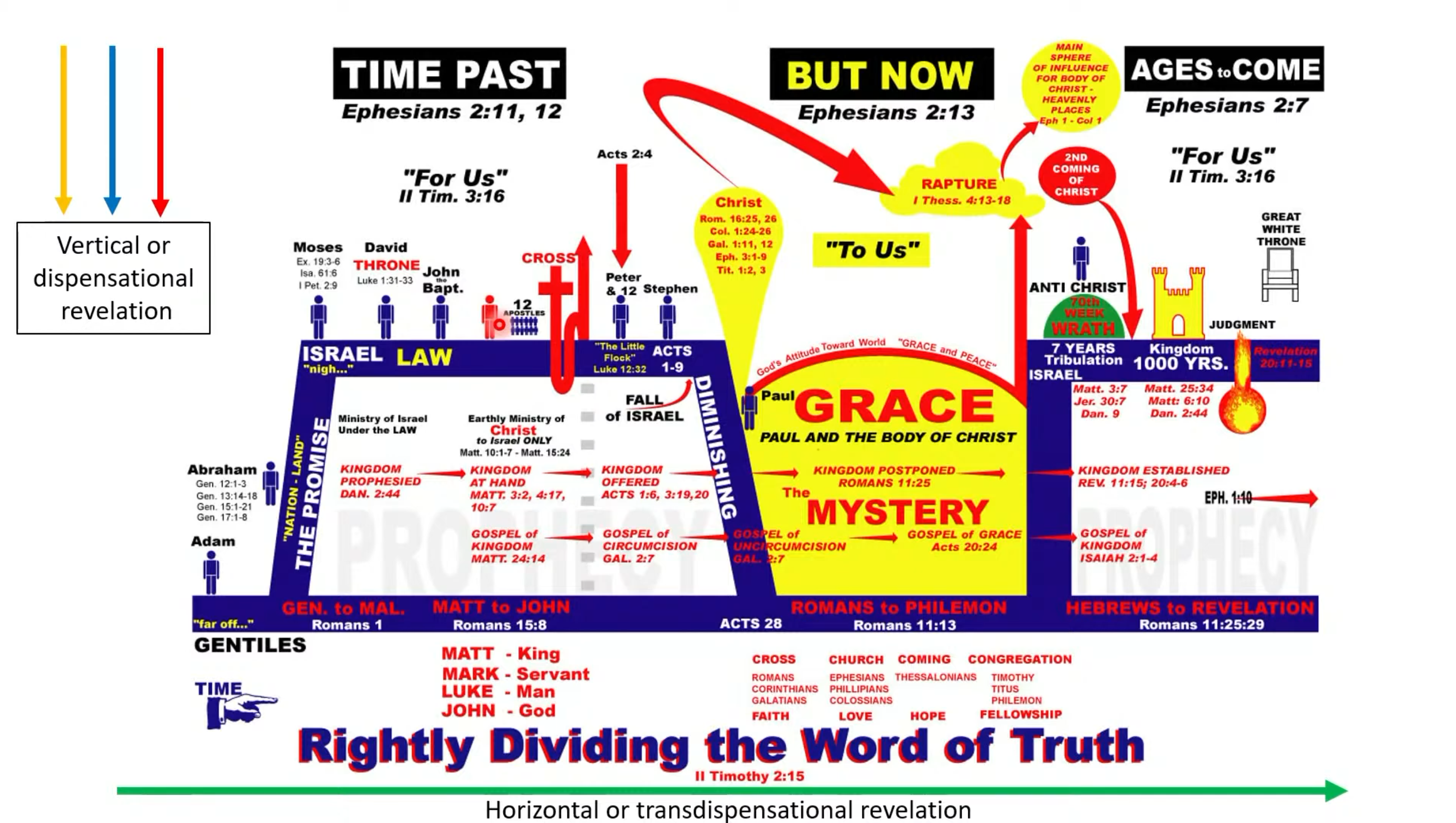
Rightly Divided Dispensational, view of the KJB , comprehensive and complete?
Is the Rightly Divided Dispensational, as listed in Paul's epistles, view of the King James Bible a more comprehensive and complete understanding of the purpose of Gods Word?
I presented the question to Grok Expert and in 1 Minute 50 seconds AI returned this answer. In my limited understanding as a person in the body of Christ, this seems to be an accurate assessment.
The "rightly dividing" (or Pauline/mid-Acts dispensational) view, with its focus on the distinct revelations in Paul's epistles within the King James Bible, is one serious and influential framework for understanding Scripture. Many who hold it find that it brings remarkable clarity and consistency to the Bible's message. Whether it is objectively "more comprehensive and complete" than other approaches (such as covenant theology) remains a point of sincere debate among Bible-believing Christians who affirm the authority of the King James Bible and the centrality of Christ.
Danwillie Blogger and Believer in Christ.: At 75, I have been blogging since Al Gore invented internet. When I was 9, a lady, Mrs Slayter lead me to Christ. At that time I had little knowledge other than I was a sinner and Christ provided my a path to heaven. Every day, I thank God for Mrs Slayter.
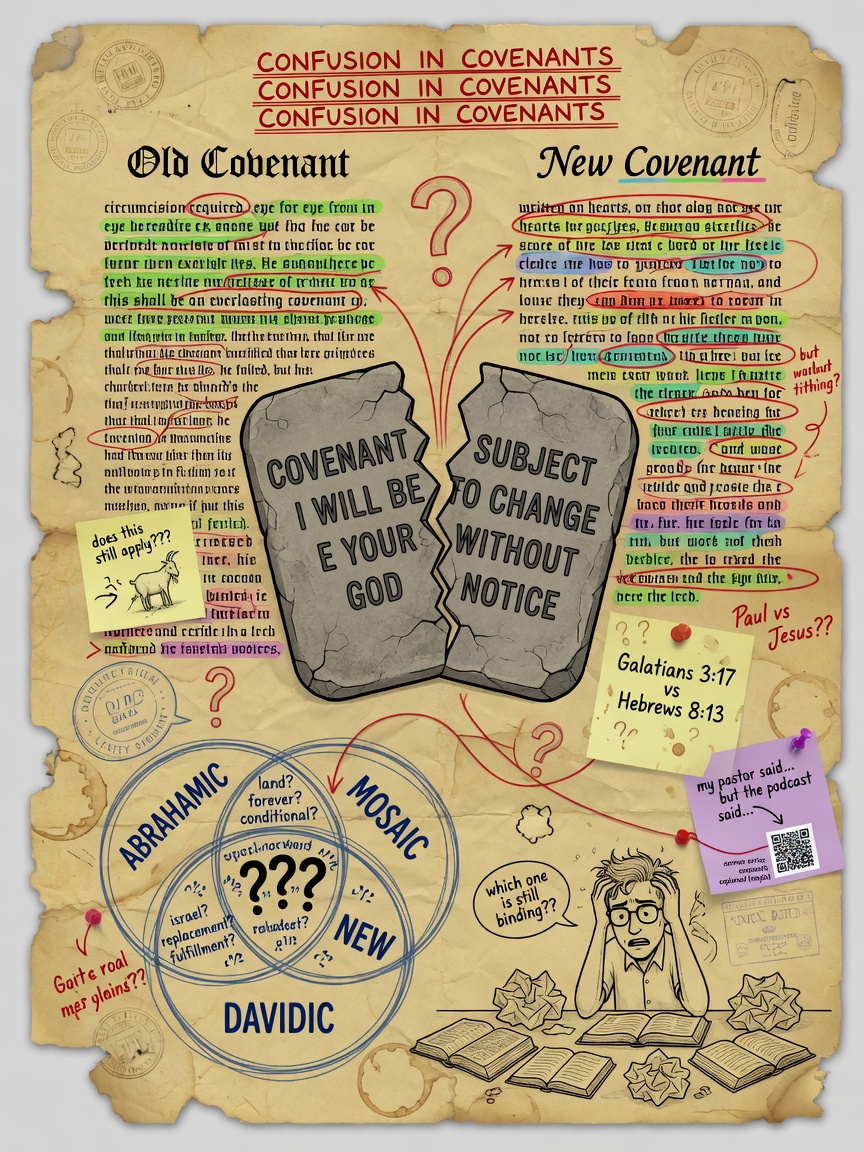
In the King James Bible (KJB), the word "covenant" appears 292 times.
It refers to a solemn, binding agreement or contract—often between God and humanity (or a specific people)—involving promises, responsibilities, conditions (or unconditional promises), signs or tokens, and frequently ratified with blood or an oath. God’s covenants demonstrate His faithfulness even when people fail.[1] (https://kingjamesbibledictionary.com/Dictionary/covenants)
The KJB uses both “covenant” (especially in the Old Testament) and “testament” (in the New Testament, translating the same underlying idea of a binding agreement or will). The books themselves are called the “Old Testament” and “New Testament,” referring to the old and new covenants.
The Major Biblical Covenants While the exact number and grouping vary by theological perspective, a common framework (widely used in KJB study resources and dispensational teaching) identifies seven covenants. Three are made with mankind in general; four involve Israel specifically.[2] (https://www.gotquestions.org/Bible-covenants.html)
Danwillie Blogger and Believer in Christ.: At 75, I have been blogging since Al Gore invented internet. When I was 9, a lady, Mrs Slayter lead me to Christ. At that time I had little knowledge other than I was a sinner and Christ provided my a path to heaven. Every day, I thank God for Mrs Slayter.
In the King James Bible (KJB/KJV), the word "dispensation" appears exactly four times.
All in the New Testament and all translated from the Greek word oikonomia (meaning stewardship, household management, administration, or economy).[1] (https://www.kingjamesbibledictionary.com/Dictionary/dispensation)
Here are the verses in full (KJV):
• 1 Corinthians 9:17: "For if I do this thing willingly, I have a reward: but if against my will, a dispensation of the gospel is committed unto me." • Ephesians 1:10: "That in the dispensation of the fulness of times he might gather together in one all things in Christ, both which are in heaven, and which are on earth; even in him:" • Ephesians 3:2: "If ye have heard of the dispensation of the grace of God which is given me to you-ward:" • Colossians 1:25: "Whereof I am made a minister, according to the dispensation of God which is given to me for you, to fulfil the word of God;"
In context, "dispensation" refers to a stewardship, commission, or specific divine administration/plan that God entrusts to someone (especially the apostle Paul for the gospel of grace) or a stage in God's overarching plan. It is closely tied to Paul's unique ministry to the Gentiles and the revelation of the "mystery" (previously hidden truths about the Church).
These are the only dispensational verses in the King James Bible. And I only include these when I am studing Gods word. Men have this word dispensation as a type and have found other periods in Biblical history that could be called dispensations. I don't agree with this use. Some of these relate to covenants and other divisions of time in history.For my studies I just include the 4 verse above in Paul's epistles. The only one I use is today's dispensation of Grace and the Mysteries for today in Paul's epistles.
Danwillie Blogger and Believer in Christ.: At 75, I have been blogging since Al Gore invented internet. When I was 9, a lady, Mrs Slayter lead me to Christ. At that time I had little knowledge other than I was a sinner and Christ provided my a path to heaven. Every day, I thank God for Mrs Slayter.
Using King James Bible, Paul's Epistles, what is the meaning of dispensation?
In this article, I used one of my models answer my questions on dispensation. Then the connection to Mysteries, and lastly the term "is now made manifest through the gospel". When asking AI anything, you need to qualify the sources. I wanted only KJB and Pauls epistles in all answers. Remember, they have a library in this case of 70 Billion.
... Thinking...
Okay, so I'm trying to understand what "dispensation" means in the King James Bible, specifically within Paul's epistles. I remember seeing the word used in places like Ephesians and Colossians, but I'm not exactly sure what it signifies. Let me break this down step by step.
First, I think about where I've heard the term "dispensation" before. In modern contexts, it often refers to a system or method of distributing something, like medication from a dispensary. But in a biblical sense, that might not be exactly the same. Maybe it's more about how God manages or arranges things over time.
I recall that Paul's letters are heavily theological and deal with concepts like grace, faith, and the relationship between Jews and Gentiles (non-Jews) in the early Christian church. So perhaps "dispensation" is related to how God interacts with humanity differently across different periods.
Danwillie Blogger and Believer in Christ.: At 75, I have been blogging since Al Gore invented internet. When I was 9, a lady, Mrs Slayter lead me to Christ. At that time I had little knowledge other than I was a sinner and Christ provided my a path to heaven. Every day, I thank God for Mrs Slayter.